
Heavy Duty Retractable Badge Holder: A Duty-Ready Buying Checklist

The “heavy duty” label doesn’t prove a badge holder will suit your shift. A heavy duty retractable badge holder still needs to fit your credential, attach securely to your uniform or gear, and retract reliably for your access routine. Since the term isn’t standardized, check the product details rather than relying on the label.
It’s reasonable to want a holder that stands up to everyday use without paying for features you won’t use. But vague descriptions make it hard to compare reel materials, attachment styles, and carrying limits. Look for details the listing actually confirms, then match them to your badge and daily tasks.
This checklist covers credential fit, attachment compatibility, reel function, and practical suitability. It also explains when a retractable reel may not suit heavier items or a demanding work routine. Lonestar Hero Gear carries ID holders and lanyards, but product details vary. Verify the specifications on the individual listing and choose by fit and function, not by the “heavy duty” label alone.
Table of Contents
Heavy Duty Retractable Badge Holders: What Buyers Should Check First
Start with your setup. Check your credential’s size and orientation, where the holder can attach to your clothing or gear, and how often you present or scan your ID. A holder that works with one uniform or access routine may not suit another.
A retractable badge holder uses a reel and retracting cord or tether to carry an ID credential and extend it for presentation. The cord draws back toward the reel after use. The badge tether reference describes this basic mechanism.
“Heavy duty” isn’t a universal rating. Treat it as a label, not proof of strength or service life. A heavy duty retractable badge holder is a sound choice only when its stated details match your credential, attachment point, and tasks.
What does heavy duty mean for a badge holder?
Look for verifiable details, including listed materials, construction information, attachment type, and intended-use guidance. If the listing provides measurable specifications, compare them with your needs. Words such as “rugged” or “duty-ready” are subjective unless supported by product details. Don’t infer cord strength or carrying capacity from the label alone.
If an important detail is missing, ask the seller or manufacturer before buying. Confirm compatibility, attachment, or performance claims rather than making assumptions. A clear answer lets you compare products using evidence instead of packaging language.
Who may benefit from a retractable ID holder?
A reel can be practical for workers who repeatedly present a credential at access points or scan a card during the workday. It keeps the ID attached while allowing it to extend for use. First responders and other service professionals may find that useful, but no single setup fits every role or uniform.
Check workplace rules first. Your employer may specify how credentials must be displayed or where holders can attach. Consider your routine too: a reel that suits frequent scans may be less appropriate if it conflicts with required placement, clothing, or equipment.
Credential: Confirm size, orientation, and how it sits in the holder.
Attachment: Check that the clip or other listed attachment suits your clothing or gear.
Use: Match the stated reel details to your access routine and work conditions.
Use these checks to guide your decision. If a listing leaves an essential specification unclear, pause and verify it before purchasing.
Check These Five Features Before Buying a Heavy Duty Retractable Badge Holder
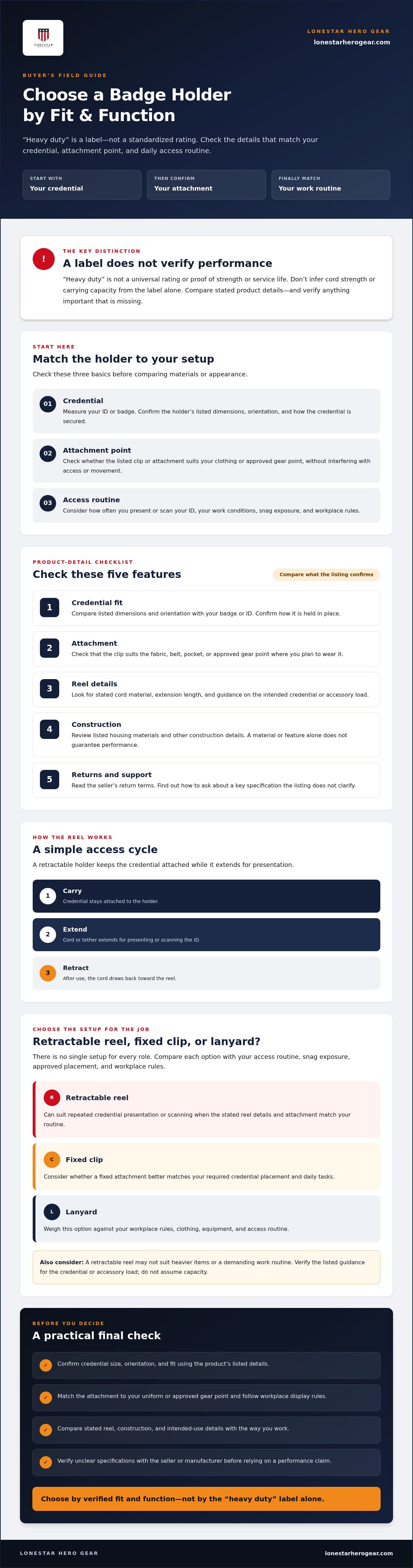
Compare the listing with your actual credential, uniform, and work routine. These five checks help distinguish useful specifications from broad product claims.
Credential fit: Compare the holder’s listed dimensions and orientation with your ID or badge. Check how the credential is secured.
Attachment: Confirm that the clip or attachment suits the fabric, belt, pocket, or approved gear point where you plan to wear it.
Reel details: Look for stated cord material, extension length, and any guidance on the intended credential or accessory load.
Construction: Review listed housing materials and other construction details. Don’t assume a material or feature guarantees a particular level of performance.
Returns and support: Read the seller’s return terms and check how to ask questions if the listing leaves a key specification unclear.
A heavy-duty label alone doesn’t verify capacity or service life. Look for product documentation to support any performance claim you plan to rely on.
Credential fit, attachment, and uniform compatibility
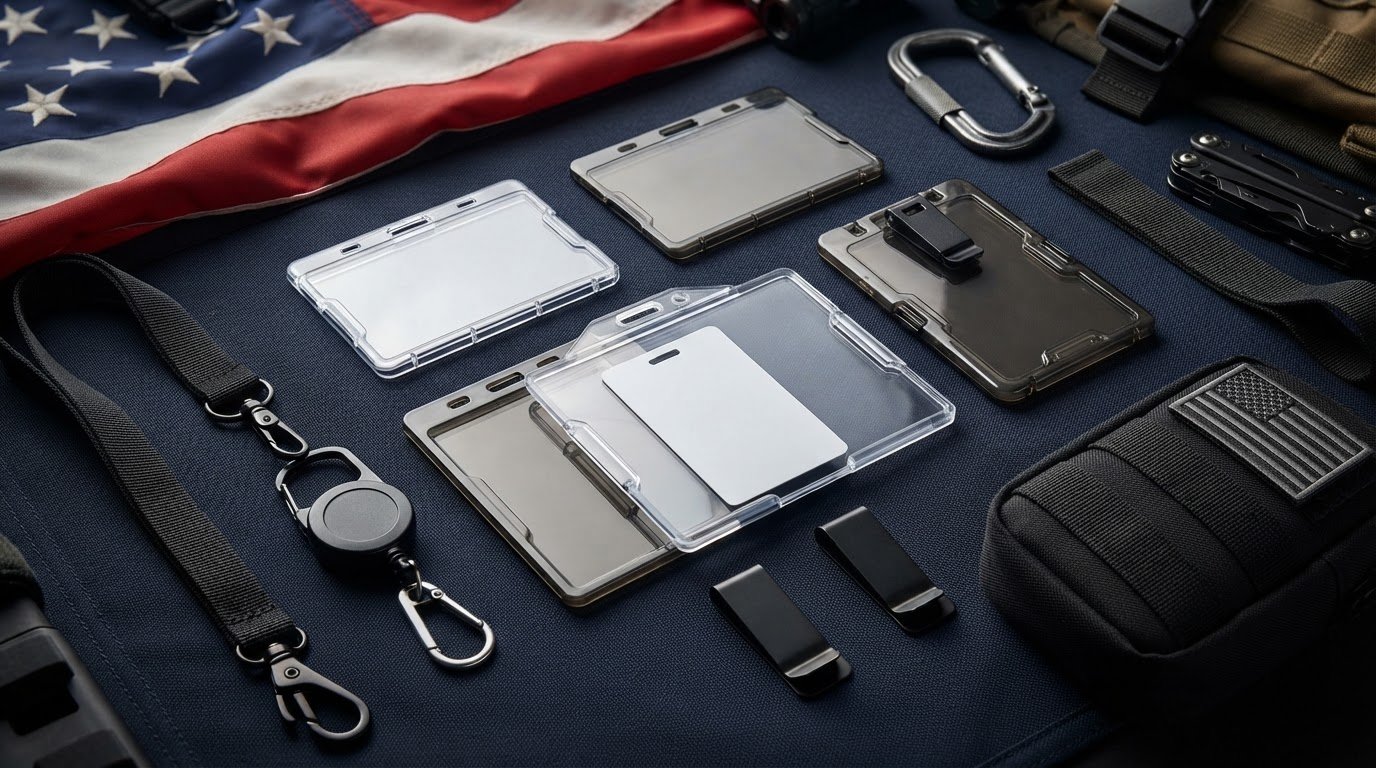
Start with measurements, not appearance. Compare the holder’s dimensions with your credential and confirm whether it accommodates the card or badge in the required orientation. Then check that its attachment can grip the garment or approved duty gear without interfering with access or movement. A clip that works on a pocket may not suit a belt or a different uniform fabric. Don’t assume one holder fits every ID, badge, or uniform.
Credential rules matter too. Follow your employer’s requirements for display and attachment. For federal facility access, review applicable NIST guidelines for PIV credentials alongside your organization’s instructions. That guidance concerns PIV credential use for access, not the performance of a particular badge holder.
Reel construction and information worth verifying
Check the listing for cord material, extension length, housing material, and manufacturer guidance. Confirm whether the stated use covers your credential alone or an added accessory. If a relevant detail isn’t specified, ask the seller or manufacturer before purchase. Don’t infer strength, lifespan, or weather resistance from words such as “rugged.”
Use the same checks when comparing ID-carry options. Browse ID holder options, then verify each listing’s attachment, fit, and specifications to see whether it meets your needs.
Retractable Badge Holder or Fixed Clip: Compare the Setup to the Job
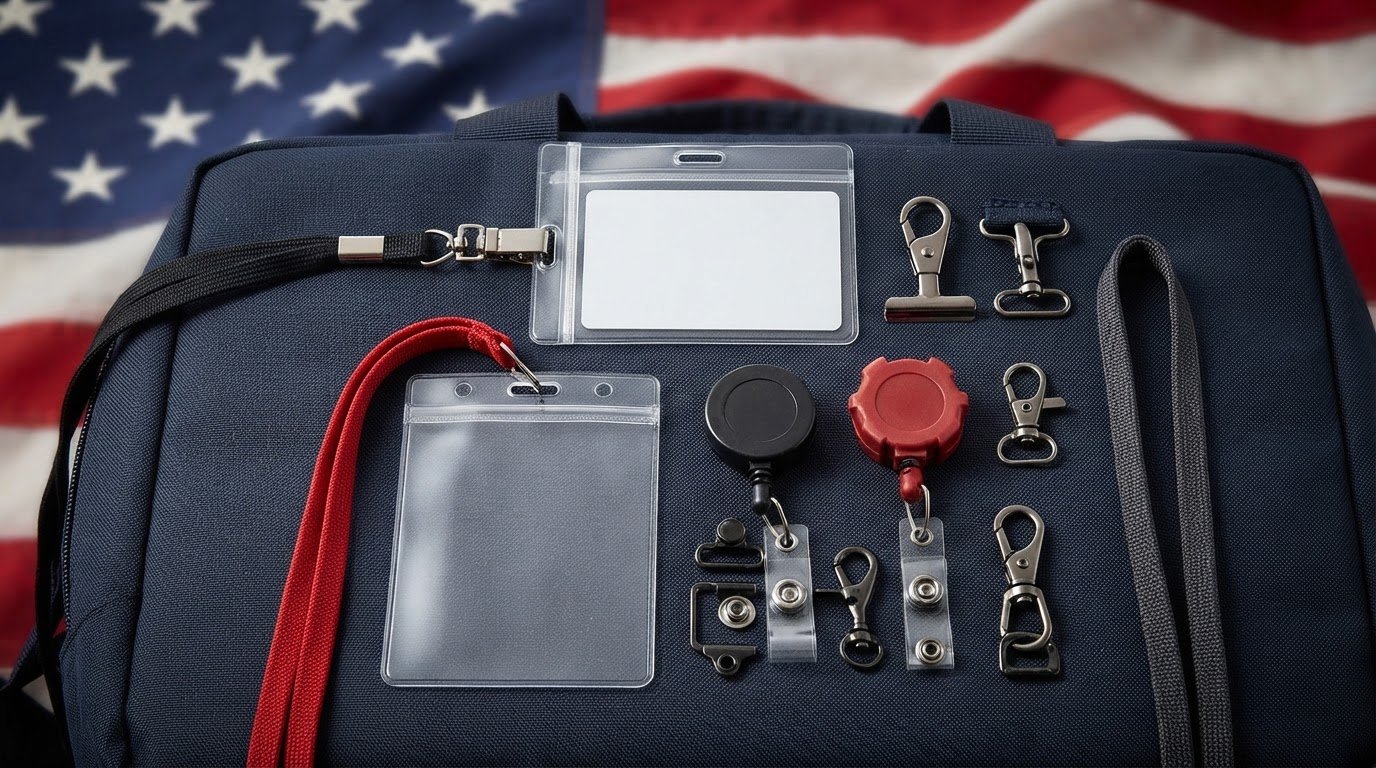
The right format depends on how you access your credential, what you wear, and what your workplace permits. A retractable reel extends for presentation. A fixed clip keeps the credential at its attachment point. A lanyard carries it around the neck or in another approved position. None is automatically stronger or safer.
When a retractable reel may suit routine credential access
Frequent scans at a reader or repeated ID presentation can make a reel convenient. Check that its stated extension reaches the access point without pulling your clothing or forcing an awkward reach. Confirm that the attachment stays in place during normal movement. A heavy duty retractable badge holder isn’t automatically stronger or safer than a fixed clip or lanyard. Its suitability depends on verified product details and your work conditions.
When a fixed clip or lanyard may fit better
For tasks where a reel could catch, interfere, or conflict with uniform requirements, consider a fixed clip or lanyard instead. A fixed clip provides a simple attachment at one point; a lanyard offers a different carry position. Neither is universally superior. Match the format to your tasks, snag exposure, access needs, and employer rules. If policy specifies credential placement, follow it before weighing convenience.
Compare the options in your actual work context. Choose the setup that gives you workable access while staying secure, unobtrusive, and within workplace requirements.
Use This Pre-Purchase Checklist for a Heavy Duty Retractable Badge Holder
Put the product listing through a practical check before ordering. Confirm the essentials first, then consider appearance and optional extras. A heavy duty retractable badge holder should match your credential and work setup, with claims supported by details you can verify.
Five checks to complete before placing an order
Credential fit: Does the listing confirm that the holder accepts your ID, badge, or approved credential? Compare its dimensions and orientation with the item you’ll carry.
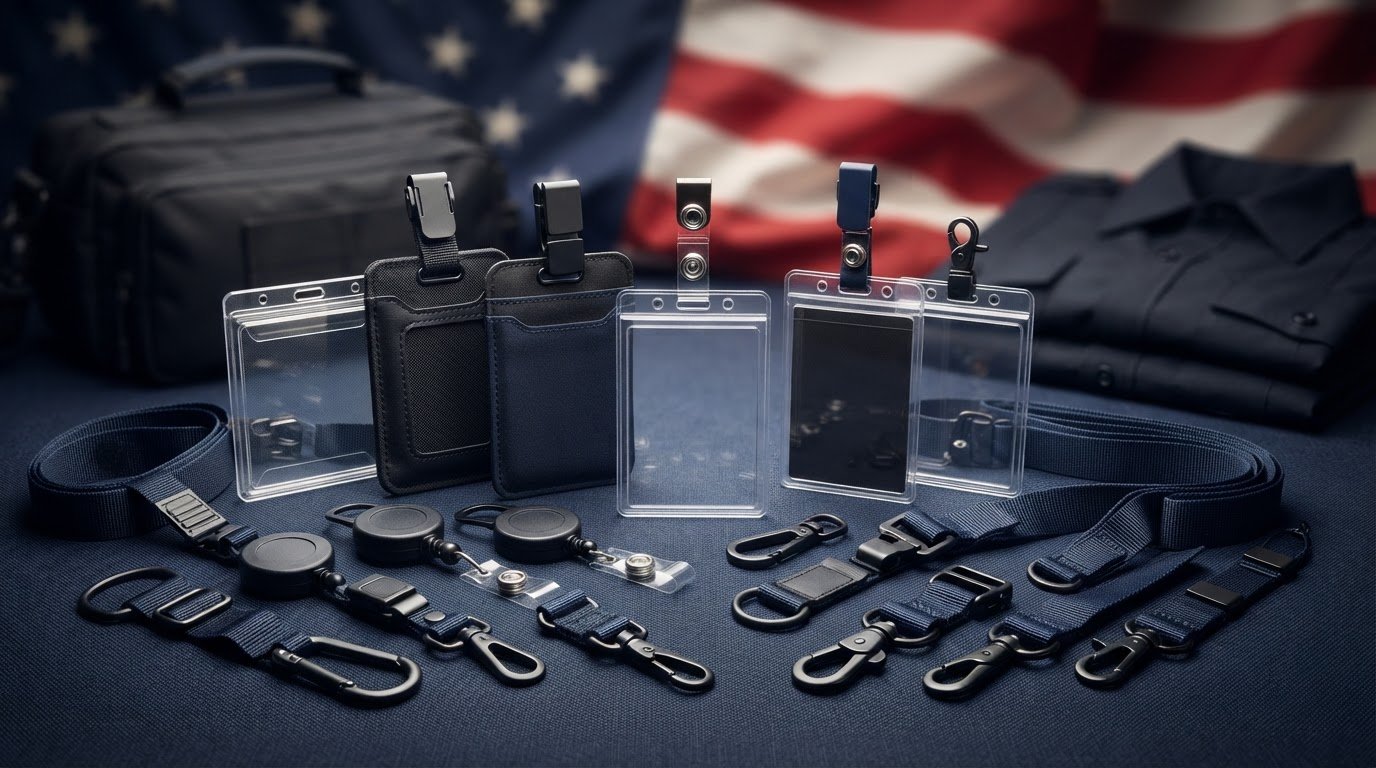
Attachment point: Is the attachment compatible with your uniform fabric, belt, pocket, or other approved carry point? Don’t assume a clip suits every garment.
Construction details: Are the materials and relevant construction information stated? Treat broad labels as descriptions, not proof of performance.
Use limits and care: Does the listing or manufacturer provide intended-use guidance, limits, or care instructions? Check whether those details fit your daily routine.
Return terms and support: Can you find the seller’s return terms and a way to ask product questions? Review both before purchase rather than assuming they’ll meet your needs.
Questions to ask when a listing leaves details unclear
A missing specification isn’t proof of poor quality. It’s a question to resolve before relying on the product. Ask the seller or manufacturer for the holder’s dimensions, compatible credential orientation, attachment details, and intended use. If you plan to carry anything beyond the credential, ask whether the product documentation addresses that use.
Ask for clarification on construction or care information you can’t interpret. Check return terms and seller support directly. If the answer doesn’t confirm a requirement that matters for your work, keep comparing options.
Prioritize credential fit, approved attachment, work compatibility, and documented product details. Consider appearance and optional extras only after those checks pass. Verify current listing information, since product details may vary by holder.
Lonestar Hero Gear carries ID holders, but specific retractable models and specifications vary by listing. Review Lonestar Hero Gear’s ID holder options and check each listing for the format, fit, and attachment details you need.
Choose a Badge Holder That Matches Your Duty Setup
Make your final choice based on your role and routine, not a general idea of what “duty-ready” should mean. Consider how you move, how often you present your credential, and what your approved uniform setup allows. First responder, military, and other workplace requirements can differ. A holder suited to one setting may not meet another setting’s needs.
Match the holder to role, uniform, and access routine
Check your employer’s rules for credential display and attachment before choosing a format. Consider where the ID must sit, whether your work involves repeated access checks, and whether your clothing or gear allows the attachment to stay in place. A convenient setup is useful only if it fits your tasks and workplace requirements.
No specific holder can be called heavy duty without supporting product information. Use the listing’s stated specifications and intended-use guidance. If the details don’t establish that the holder suits your setup, don’t treat the label as confirmation.
What to confirm before ordering online
Review the individual listing again when you’re ready to purchase. Confirm that the item is available and that its current description still supports the fit and use you need. Read the seller’s terms, including returns and support. Don’t assume these details or product specifications are the same across different ID holders.
For broader credential-holder context, consult the ID Holders: Complete Tactical Credential Guide. Then use this final check before placing an order:
Credential: Does the holder accept your specific ID or badge?
Attachment: Does it suit your approved uniform or carry point?
Specifications: Are the details you rely on stated and clear?
Work conditions: Does the setup fit your access routine and role?
Purchase terms: Have you checked current availability, returns, and seller support?
Choose by fit, attachment, documented details, and work conditions. Review the available ID holders and confirm the specifications on the individual listing. No specific retractable model or performance claim is confirmed by a general category listing.
Make Your Next Badge Holder Choice With Confidence
A dependable choice starts with the credential you carry and the conditions you work in. Match the holder’s fit and attachment to your approved uniform setup, then check the product information that supports its stated use. The “heavy duty” label alone doesn’t confirm capacity or service life.
Before ordering, verify the listing’s details, current availability, and seller terms. Confirm that the holder is retractable if that’s the format you need. These checks help you focus on features that suit your routine while keeping fit and compatibility first.
Lonestar Hero Gear offers ID holders through its online store. Browse the available options and review each listing carefully before choosing. Shop ID holders at Lonestar Hero Gear using the checklist above to compare fit, attachment, and listed specifications.
Frequently Asked Questions
What makes a retractable badge holder heavy duty?
There’s no universal “heavy duty” rating for badge holders. Look for product-specific information, such as stated materials, construction, intended use, and any limits or performance specifications. A description calling a holder “rugged” or “duty-ready” isn’t measurable proof. If a key detail is missing, ask the seller or manufacturer rather than assuming the label confirms capacity, durability, or service life.
Are retractable badge holders suitable for first responders?
They may suit some first responders, depending on role, uniform, access routine, and employer requirements. A reel can be convenient for repeated ID presentation, but it may not fit every task or attachment point. Check whether it could catch or interfere with equipment, and follow workplace rules for credential display. Compare the product details with your approved setup before choosing one for duty use.
How do I know whether a retractable badge holder will fit my ID?
Compare the product’s listed dimensions and orientation with your actual ID or badge. Check how the credential is secured and whether the listing identifies compatible credential sizes or types. Don’t rely on a product photo alone, since scale and orientation may be unclear. If measurements or compatibility details are missing, ask the seller or manufacturer before ordering. Confirm fit rather than guessing.
Can a retractable badge holder attach to a uniform?
It can attach if its listed clip or attachment suits the uniform’s fabric and the location where you’re allowed to wear it. A clip that works on a pocket may not hold properly on another garment or approved gear point. Check the attachment details and workplace rules. If either is unclear, confirm compatibility before use. Don’t assume one attachment works with every uniform.
Are retractable badge reels stronger than standard badge clips?
Not necessarily. A retractable reel and a fixed clip use different mechanisms, and their performance depends on the specific product’s construction and stated specifications. “Heavy duty” alone doesn’t verify strength or service life. Compare documented details for the intended use, then consider whether the reel or clip suits your access routine and work conditions. Don’t treat either format as stronger without supporting product information.
How do I choose between a badge reel and a lanyard?
Choose based on how you present your ID, where you’re permitted to carry it, and whether either format could interfere with your tasks. A reel may suit frequent scans if it reaches the access point comfortably. A lanyard offers a different carry position. Check workplace policy, uniform requirements, and snag exposure. Neither option is right for every role, so match the format to your daily setup.
What should I check before buying a heavy duty retractable badge holder online?
Confirm the credential fit, orientation, attachment type, and any stated construction or intended-use details. Review product limits and care guidance if provided. Check current availability, return terms, and how to contact the seller with questions. If the listing leaves a necessary specification unclear, ask for confirmation before ordering. Don’t treat a “heavy duty” label as proof of capacity, durability, or compatibility with your work setup.
Comments